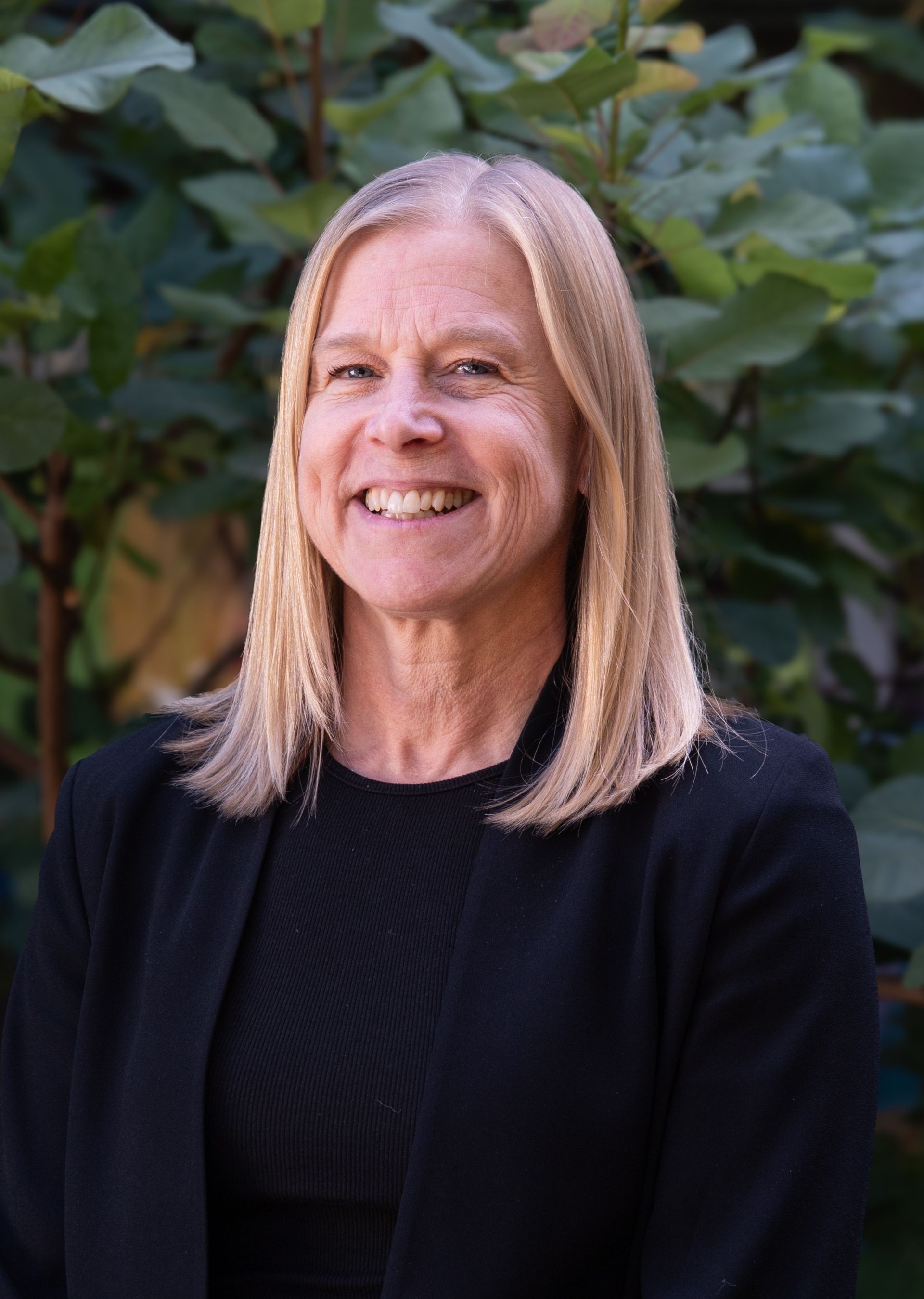
Here at the LGMA, we are proud to highlight our members and their many achievements in BC local government. We’re highlighting longtime LGMA member and dedicated supporter, Linda Glenday, CAO for the District of Squamish. Linda was the successful applicant for the 2025-26 LGMA Overseas Manager Exchange Program, and a guest faculty member and mentor of the MATI® Leadership program. She will be retiring next year, capping off an eventful and successful career in local government. We hope you enjoy Linda's story and membership journey.
Q: Can you describe your role and title, including how long you've worked in local government?
A: I have worked in local government since 2007. I am currently the CAO for the District of Squamish, one of BC's fastest-growing municipalities. As CAO, I lead the organization in implementing Council's strategic priorities and delivering municipal services. I am responsible for providing organizational leadership, fostering a positive workplace culture, and ensuring we have the people, systems, and resources needed to serve the community effectively while building strong relationships with staff, residents, Council, partner organizations, and other levels of government.
Q: Can you tell us a bit about your background, local government and otherwise?
A: I zig-zagged my way into local government, and once I found it, I knew I had found the right profession for my values and interests.
I am from Ontario, where I completed a science degree while spending my winters coaching alpine skiing. After graduation, I moved to BC and spent several years working as a restaurant server while pursuing my passions for skiing, mountain biking, and backpacking abroad. Looking back, that role taught me more about customer service, communication, and human behaviour than I realized at the time.
As I decided to put down roots in the Sea to Sky Corridor, I transitioned into a professional career in Human Resources. I started as an HR coordinator in the tourism sector, worked my way through increasingly senior roles, and completed my MBA. During that time, I was also actively involved with community non-profit organizations.
It eventually became clear to me that I wanted to contribute directly to building strong communities, and local government offered the perfect opportunity to do that. In 2007, I joined the District of Squamish as Human Resources Manager. Since then, I have had the privilege of serving in General Manager roles and as Deputy CAO before becoming CAO in 2015.
Q: What are some key milestones in your professional journey?
A: Advancing reconciliation with Squamish Nation has been among the most meaningful work of my career. Over the past decade, I have worked alongside councils, District staff, and Squamish Nation Council and staff to deepen understanding of colonial history, build relationships, and create opportunities for collaboration. The signing of the 2025 Memorandum of Understanding between the District and Squamish Nation was a significant milestone, and I am grateful to have worked closely with Sheldon Tetrault, CAO, and his team to help bring that commitment to life. Working closely with Squamish Nation, the District recently completed one of the priority activities in the MOU: a formal apology for past colonial harms. More information about the formal apology can be found in this local news article and in ta wanáxw sníchim The True Words Report.
- The Squamish Oceanfront project. As Deputy CAO, I led the completion of conditions required to finalize the sale and phased development agreement for the redevelopment of the former industrial waterfront lands. More than a decade later, seeing those plans become reality, including the opening of Sp'akw'us Feather Park and restored public access to the ocean, is incredibly rewarding.
- Supporting community safety and economic development through the Cheekeye Fan Debris Flow Barrier project. This initiative required extensive collaboration with the Province and Squamish Nation to address risks associated with debris flows to enable protection of existing community residents, as well as the Squamish Nation partnership for a housing and commercial development. It took many years and a team of several expert staff at the District to see this project through from conception to delivery.
- Leading organizational culture development. Shortly after becoming CAO, we undertook significant work to strengthen organizational culture and employee engagement. More recently, we completed a year-long effort involving employees across the organization to refresh our vision, values, and culture. That process reinforced for me that great public service begins with engaged people working toward a shared purpose.
- Finally, giving back to the profession is important to me, and I have really enjoyed being a mentor at MATI® Leadership (2017-2019) and serving on the Board of Examiners since 2022.
Q: How has being an LGMA member benefited your professional development?
A: As a participant in MATI® programs, I gained foundational leadership skills and built relationships that continue today. As a guest faculty member and mentor, I appreciated the opportunities for shared learning and the exchange of ideas.
The CAO Forums are invaluable. Local government leadership can sometimes feel isolating, and having a trusted network of peers who understand the challenges and opportunities of the profession is tremendously important.
I also value the LGMA annual conference (when I can get there!) and reading the Exchange to stay informed about emerging issues and innovative practices across the province. And last – the LGMA Management Overseas Exchange Program was an incredible development opportunity!
Q: What have you learned from your experiences that you believe would benefit others in your field?
A: Build and nurture your professional network. I continually benefit from insight and experience shared with peers in other local organizations. Having a counterpart that you can call when navigating a complex problem or needing a boost has been important support for me to ensure I remain effective and manage the inevitable stress.
- Cut and paste. One of the strengths of local government is our willingness to collaborate. Borrow the bylaw, adapt the policy, share the template, and offer your own work to others when you can.
- Commit to ongoing learning and networking. Attend conferences, participate in courses, and stay curious. The local government environment is constantly evolving. Ensuring that I scheduled regular learning or networking (even once a year when it’s hectic) helped keep me current and energized.
- Stay grounded in your values and passion. Public Service can be challenging. Know that the vast majority of residents appreciate the great work you and your team do, even if they are not always the loudest voices in the room. Seek validation from your own sense of purpose, your trusted peers, and the broader community you serve. Remember what fires you up about the work you do. And avoid social media (unless you're buying or selling used furniture).
- Leadership is a team sport.
Personal Rapid-fire Questions:
Q: Coffee or tea?
A: Coffee, several.
Q: Morning person or night owl?
A: Neither. I covet sleep, so my peak performance is mid-day.
Q: Dogs or cats?
A: Allergic to both. I love seeing bears in the wild (from a safe distance!)
Q: Favourite season?
A: Summer.
Q: Favourite place to travel?
A: I've recently fallen in love with New Zealand!
Q: If you could instantly master one new skill, what would it be?
A: Playing guitar.
Q: What is one fun fact about yourself that you would like to share with our members?
A: A recent favourite hobby is improv. I attend amateur workshops to stretch my creative muscles and enjoy a lot of laughs!